#canyoufeel
yourbody?
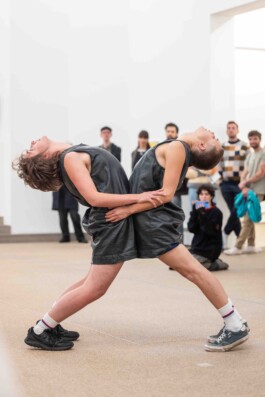
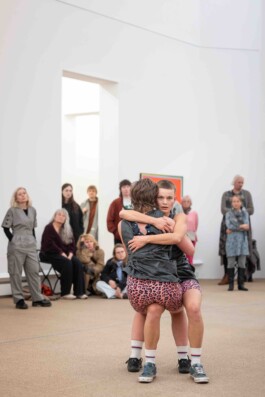
#canyoufeelyourbody is a participatory performance inspired by social media scrolling.
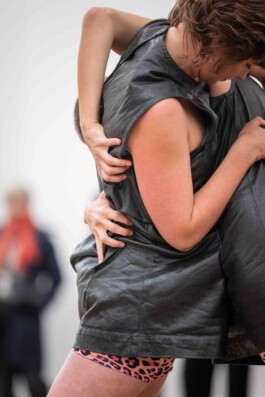
What does it feel like to be truly stuck — with someone, in an endless scrolling session, in spirals of thought? This 25-minute dance duet explores layers of skin, glitch, and sensation, questioning what happens to a body in the age of social media feeds. Two dancers repeatedly embrace, strike, and collapse into one another, accompanied by a digital sound score that mimics the sonic landscape of an Instagram feed. They wear black latex costumes that make them cling together. The piece is conceived for the grand hall of the Märkisches Museum Witten.
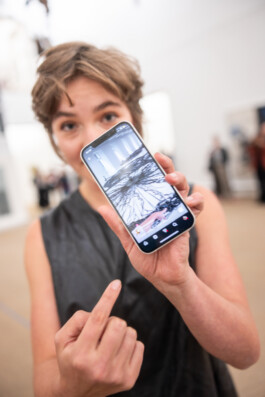
At the beginning of the piece, the audience generates an initial acoustic impulse by loudly scrolling through their own social media feeds, making the digital environment physically audible in the space. From there, an independent sound collage unfolds, inspired by the rhythm and texture of an Instagram feed. A third sonic layer emerges from the latex costumes worn by the performers: contact, pressure, and friction become amplified, creating a tactile soundscape grounded in the body itself.
As the dancers navigate these intersecting auditory environments—real scroll sessions, algorithmic noise, and the raw materiality of latex—the performance traces moments of overwhelm, sculptural stillness, and disorientation. The feed becomes a stage on which the question of bodily presence in digital saturation is played out.
Loveletters as Movement Donations - From Physical to Digital and Back Again
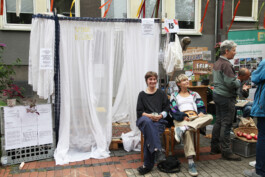
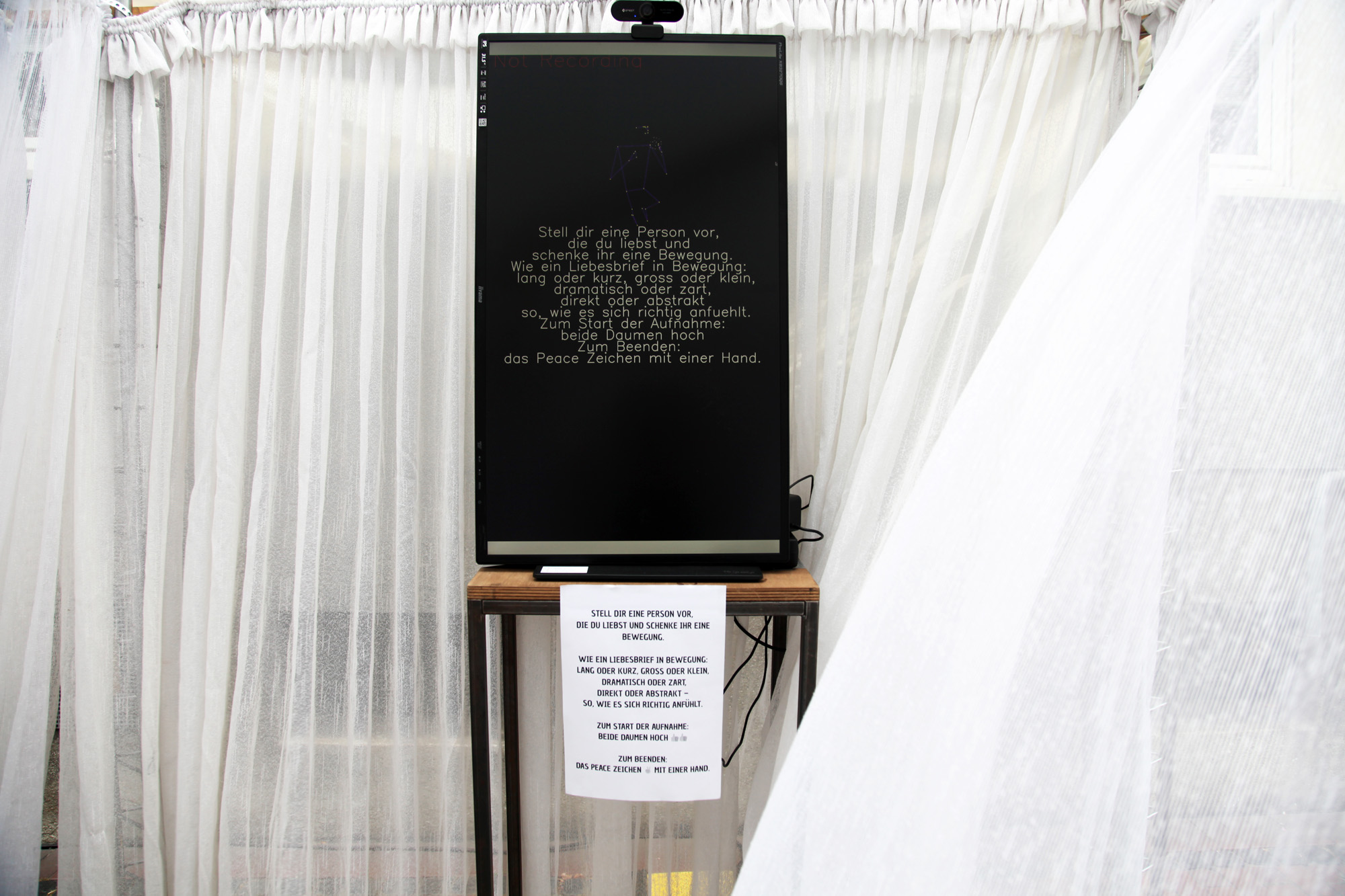
Installation at Wiesnviertelfest
Participants step into the installation and give a signal to the camera, donating a movement in the form of a love letter to someone important to them. Only the motion data—not the video—is stored. These data are later translated back into physical bodies through dance. This research is ongoing, we are currently translating the movements from digital back to physical.