
Zukunftsresonanz is a participatory media project that explores how people excluded from formal voting systems can engage with political questions through embodied interaction.


The project worked with two groups: minors and adults without voting rights (e.g. people with Duldung or asylum status) who are structurally excluded from elections despite being directly affected by them.
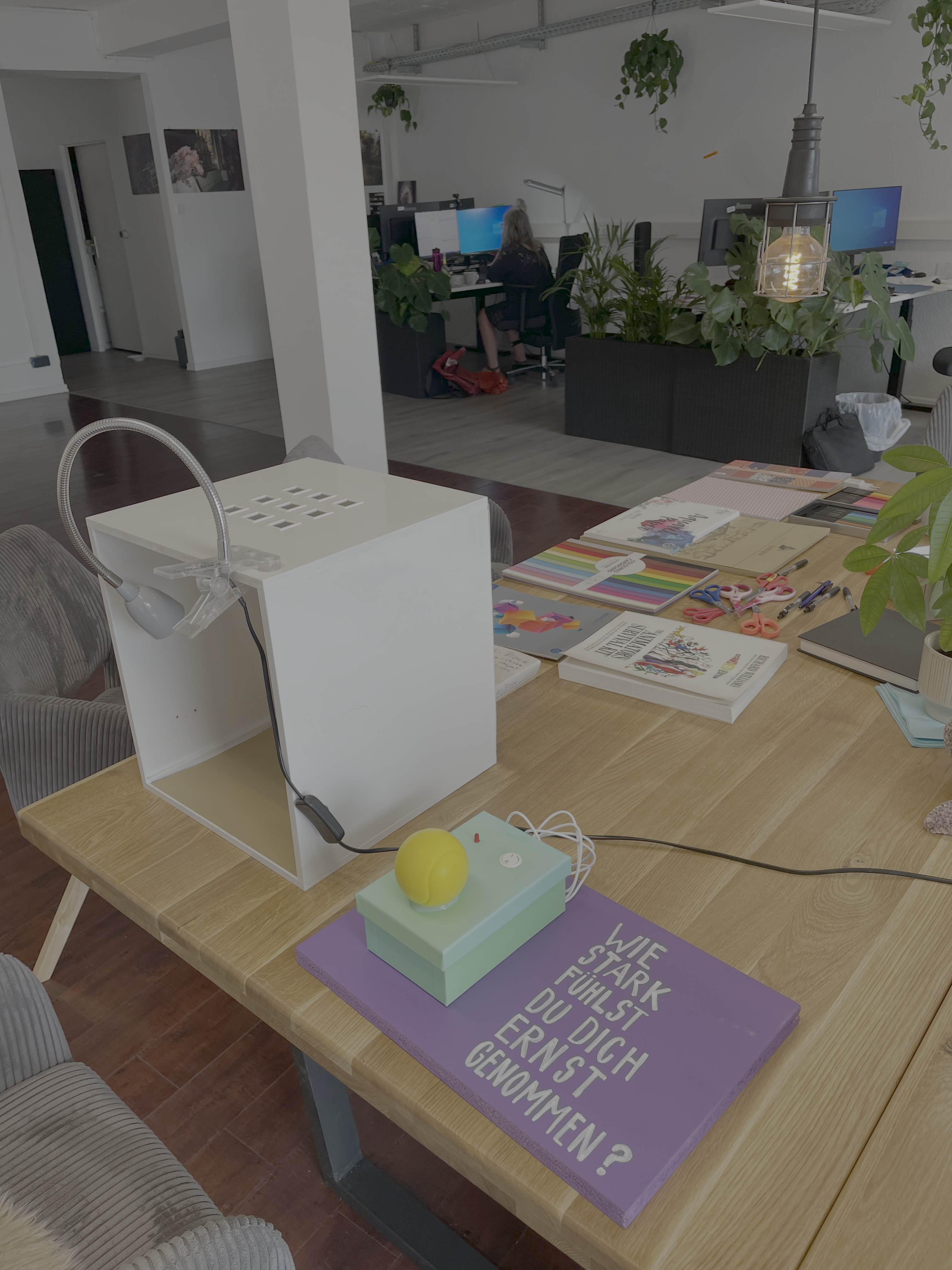
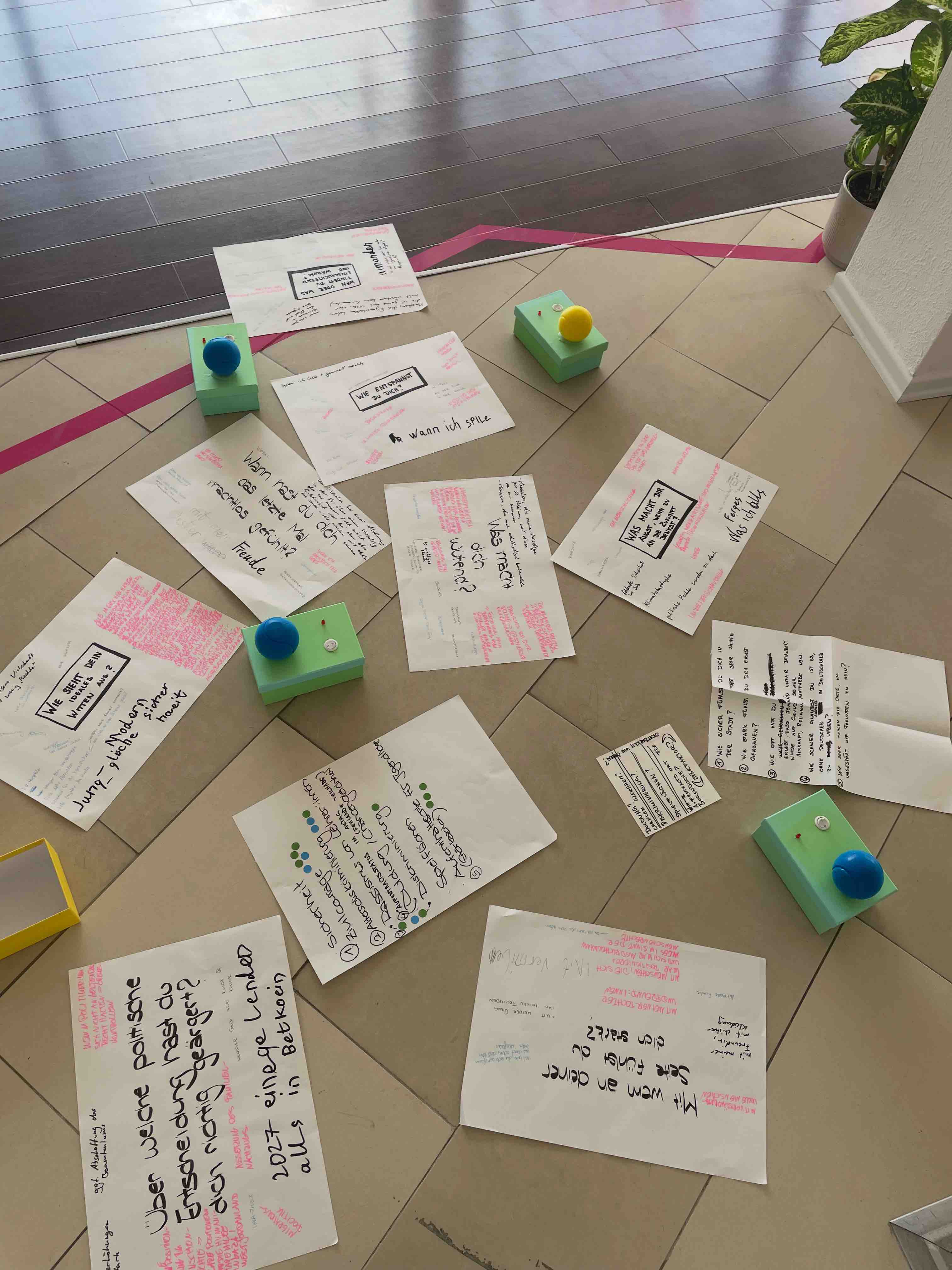
At its core are the BlueBallSensors—custom-developed interfaces that translate pressure into continuous data. Participants respond to collectively developed questions (Workshop 1) by applying varying intensity. This creates a form of input that is intuitive, language-independent, and operates on a spectrum rather than fixed categories. To visualize the questions, participants created stop-motions films (Workshop2).
The collected responses, together with stop-motion films, were projected into public space in the weeks leading up to the municipal elections in Witten. This positioned the results of those who cannot officially vote alongside the formal electoral process.
The project proposes an alternative model of participation: voting as a continuous, embodied input rather than a discrete, language-based decision. It situates political expression within a framework of human–computer interaction and choreographic thinking—where engagement is measured through the body rather than declared through representation.


Zukunftsresonanz is a participatory media project that explores how people excluded from formal voting systems can engage with political questions through embodied interaction.

The project worked with two groups: minors and adults without voting rights (e.g. people with Duldung or asylum status) who are structurally excluded from elections despite being directly affected by them.
At its core are the BlueBallSensors—custom-developed interfaces that translate pressure into continuous data. Participants respond to collectively developed questions (Workshop 1) by applying varying intensity. This creates a form of input that is intuitive, language-independent, and operates on a spectrum rather than fixed categories. To visualize the questions, participants created stop-motions films (Workshop2).

The collected responses, together with stop-motion films, were projected into public space in the weeks leading up to the municipal elections in Witten. This positioned the results of those who cannot officially vote alongside the formal electoral process.
The project proposes an alternative model of participation: voting as a continuous, embodied input rather than a discrete, language-based decision. It situates political expression within a framework of human–computer interaction and choreographic thinking—where engagement is measured through the body rather than declared through representation.


© 2025 Julie C. Stamm