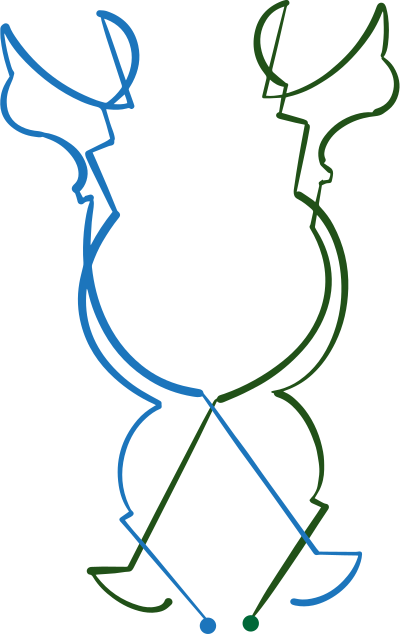
Tunnel Bingo is a participatory performance game in public space.
The game consists of 16 choreographic paths, each walked in pairs. These paths are generated from historical dance notations by John Isaac (c. 1700) and maps of underground water-drainage tunnels in and around Witten. Both movement systems are linked to the rise of systematic mining and cultures of extraction; machine-learning–driven methods complete this triangle. Participants use the generated paths as maps, coordinating with their partner and the surrounding space at the same time. Tunnel Bingo uses biased data as a choreographic tool to explore how historical decisions, infrastructures, and absences are amplified rather than erased by automation and AI.

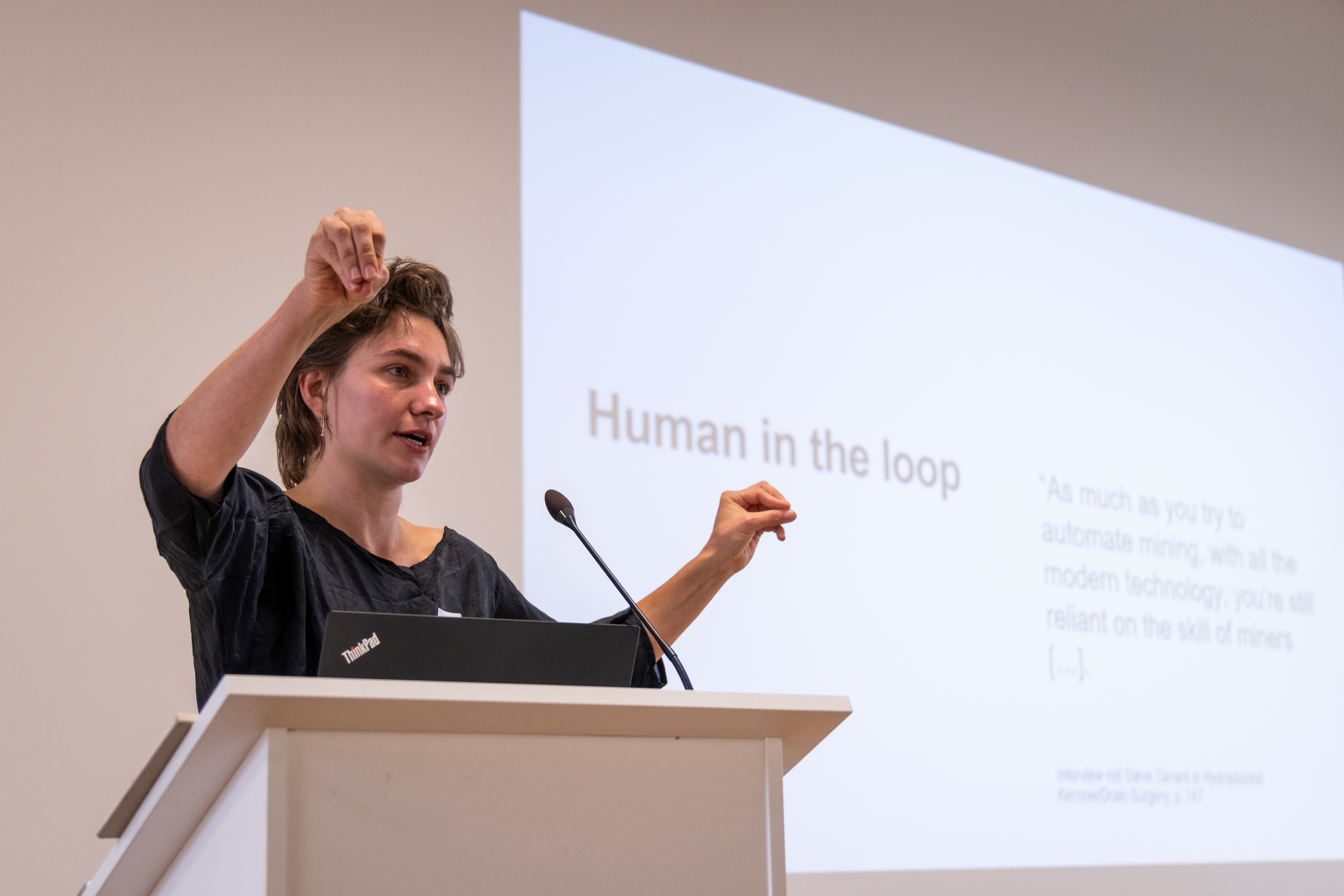
Background: Bias and Extraction
The choreographic paths of Tunnel Bingo were digitally generated using processes assisted by machine learning. Because the key to the movement notation of Mr. Isaacs choreographies is only partly preserved, I extracted only their spatial trajectories — not their steps — as source material.
These historical dance paths were then used to deliberately bend and "bias" the pathways of the tunnel systems in and around Witten. Through this process of data distortion, the work connects two regions shaped by extraction: Cornwall and Witten. Both are marked by early underground drainage tunnels developed for tin/copper and coal mining — infrastructures that are costly, persistent, and still actively shaping environmental and social conditions today.
Queen Anne herself played a role in facilitating the cheaper export of copper and tin from Cornwall — materials that continue to underpin contemporary digital hardware, from wiring to soldering. Only a few decades later, coal mining became a large scale thing in West Germany shaping the region's economic and social landscape.
Research:
Initially, basically as a tourist in NRW, I was fascinated by the carved landscape that outlives the coal mining as well as the tunnels' invisibility. During artist_holiday[1] Celia Morris and I started walking the historical scores in public space as a way to feel more comfortable in Witten and get intimate with the place. We were walking on top of tunnel systems and I wanted to create a time linkage.
Books during the research:
Atlas of AI — Kate Crawford
Hydroplutonic Kernow — Robin Mackay et al.


Tunnel Bingo is a participatory performance game in public space.
The game consists of 16 choreographic paths, each walked in pairs. These paths are generated from historical dance notations by John Isaac (c. 1700) and maps of underground water-drainage tunnels in and around Witten. Both movement systems are linked to the rise of systematic mining and cultures of extraction; machine-learning–driven methods complete this triangle. Participants use the generated paths as maps, coordinating with their partner and the surrounding space at the same time. Tunnel Bingo uses biased data as a choreographic tool to explore how historical decisions, infrastructures, and absences are amplified rather than erased by automation and AI.
Background: Bias and Extraction
The choreographic paths of Tunnel Bingo were digitally generated using processes assisted by machine learning. Because the key to the movement notation of Mr. Isaacs choreographies is only partly preserved, I extracted only their spatial trajectories — not their steps — as source material.
These historical dance paths were then used to deliberately bend and "bias" the pathways of the tunnel systems in and around Witten. Through this process of data distortion, the work connects two regions shaped by extraction: Cornwall and Witten. Both are marked by early underground drainage tunnels developed for tin/copper and coal mining — infrastructures that are costly, persistent, and still actively shaping environmental and social conditions today.
Queen Anne herself played a role in facilitating the cheaper export of copper and tin from Cornwall — materials that continue to underpin contemporary digital hardware, from wiring to soldering. Only a few decades later, coal mining became a large scale thing in West Germany shaping the region's economic and social landscape.
Research:
Initially, basically as a tourist in NRW, I was fascinated by the carved landscape that outlives the coal mining as well as the tunnels' invisibility. During artist_holiday[1] Celia Morris and I started walking the historical scores in public space as a way to feel more comfortable in Witten and get intimate with the place. We were walking on top of tunnel systems and I wanted to create a time linkage.

Books during the research:
Atlas of AI — Kate Crawford
Hydroplutonic Kernow — Robin Mackay et al.


© 2025 Julie C. Stamm